Showing posts with label Astronomy. Show all posts

Saturday, May 28, 2016

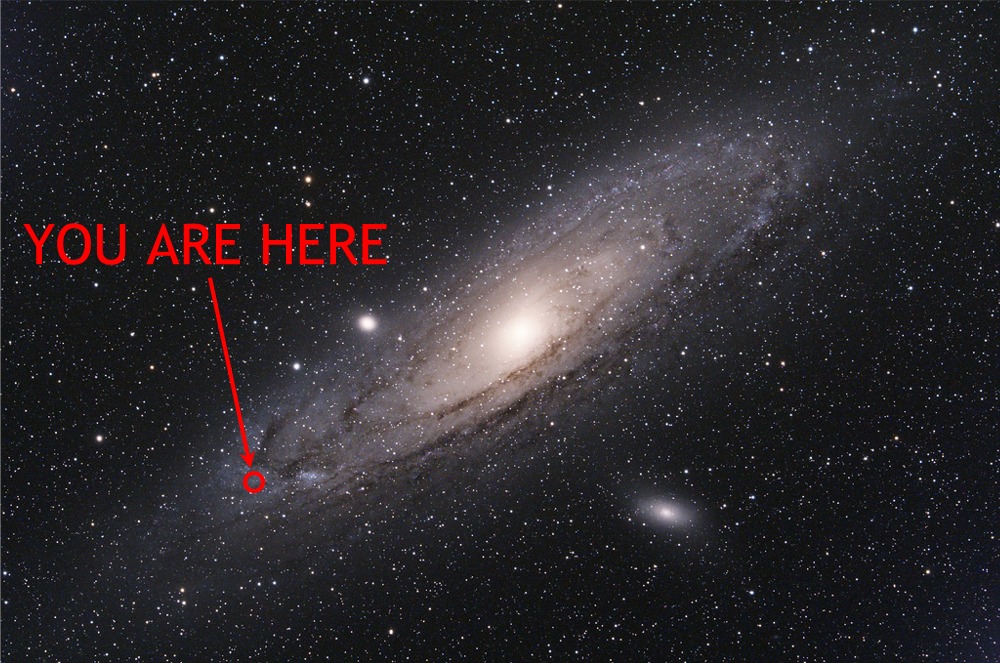
1.36 Understand that: the universe is a large collection of billions of galaxies, a galaxy is a large collection of billions of stars, our solar system is in the Milky Way galaxy.


So basically:
  • the universe is a large collection of billions of galaxies 
  • a galaxy is a large collection of billions of stars
  • our solar system is in the Milky Way galaxy. 

1.35 Use the relationship between orbital speed, orbital radius and time period


  1. orbital speed = 2 x π x r / T
  2. ( 2 x pi x radius ÷ time)
Orbital speed in m/s
Radius in m
Time in sec

1.34 Describe the differences in the orbits of comets, moons and planets


  • All have elliptical orbits
  • Moons orbit around planets
  • Comets orbit stars
  • Planets orbit stars
  • Comets have elongated orbits
Figure 1: A comet's orbit
The comet will be moving fastest when it is further away from the star (right end of the ellipse)

1.33 Explain that gravitational force causes the following..


...

  • causes moons to orbit planets
  • causes the planets to orbit the sun
  • causes artificial satellites to orbit the Earth 
  • causes comets to orbit the sun 
If an object is within a planet's gravitational field, it will orbit around it in an orbit. These are not perfect, circular orbits for planets and satellites. Comets have elliptical orbits.

1.32 Understand gravitational field strength, g, and recall that it is different on other planets and the moon from that on the Earth

All objects have an attracting force. The Earth attracts you and you attract the Earth. The larger the object, the larger the attracting force. Planets are large enough to have a gravitational field, and we measure this and call it g

On earth, g is approximately 10 n/kg

On other planets, it varies with their mass.